
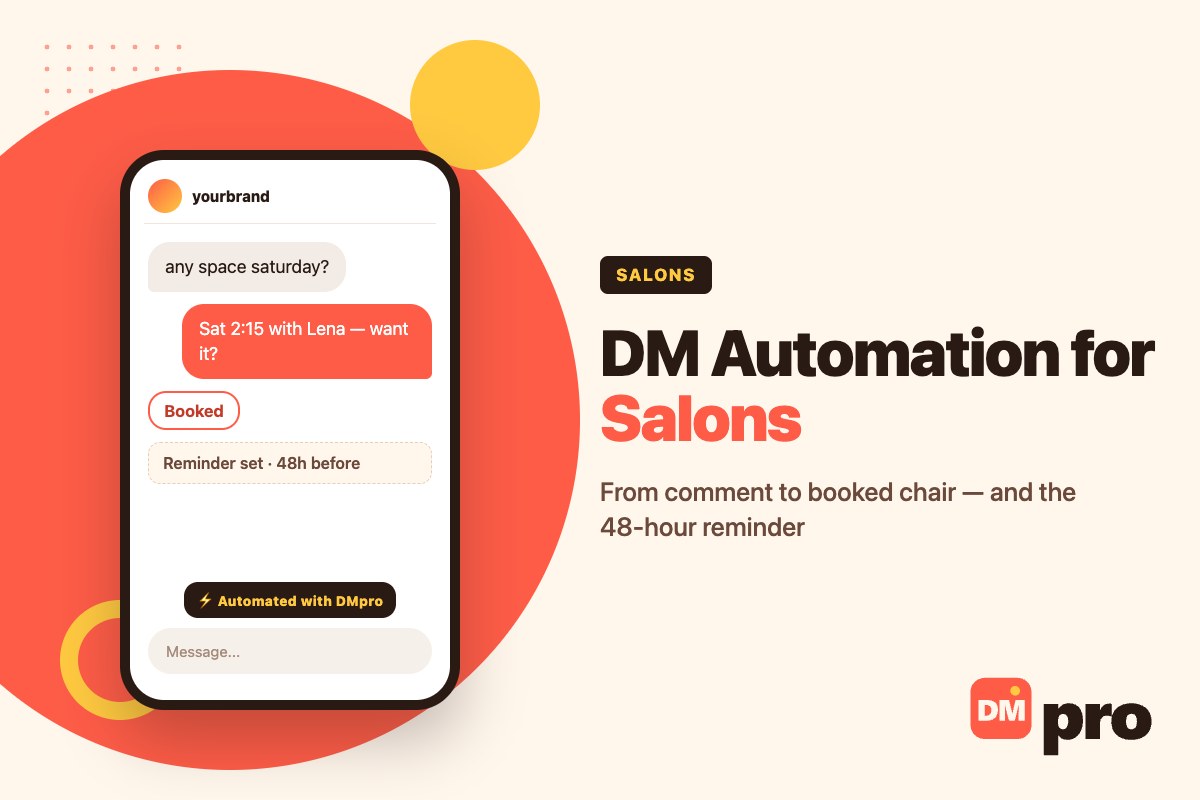
Salon booking automation starts where the marketing does: a photograph of the work, with the enquiry as a comment underneath it. “How much is that?”, “any space Saturday?”, “who did this?” – asked by people who are already most of the way to booking.
Which makes this the most direct flow in the whole cluster: three questions, one calendar, done. The interesting part is not the booking, though. It is the reminder that stops the booking evaporating.
The flow shape is standard – see DM automation by industry. Below are the three variables for this trade, and the piece that actually earns the money.
Key takeaways
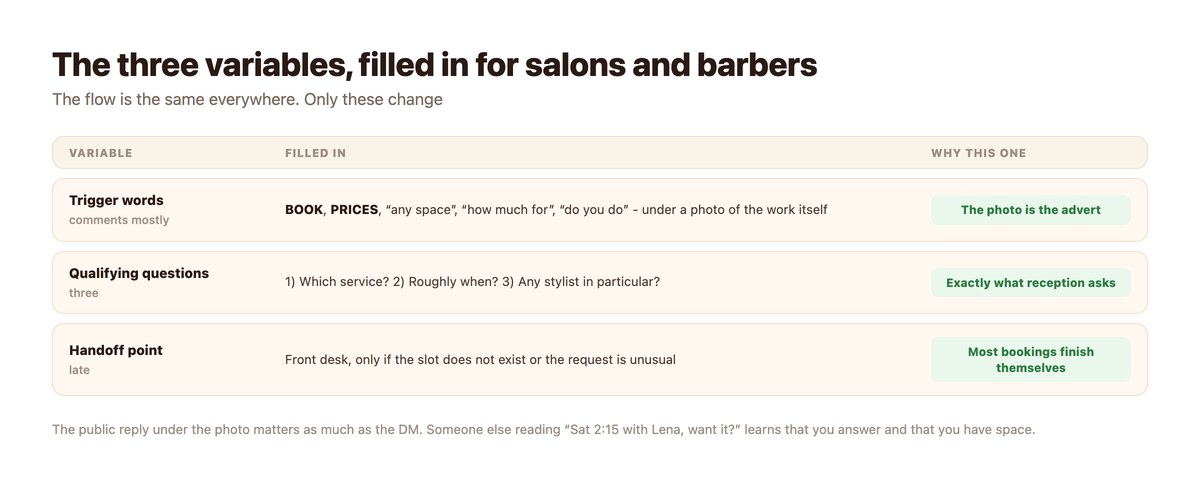
- Comments are the trigger here, because the photograph is the advert and the public reply is seen by everyone reading.
- Three questions: which service, roughly when, any stylist in particular. Exactly what reception asks.
- End in a real slot from your own calendar, not a promise to call back.
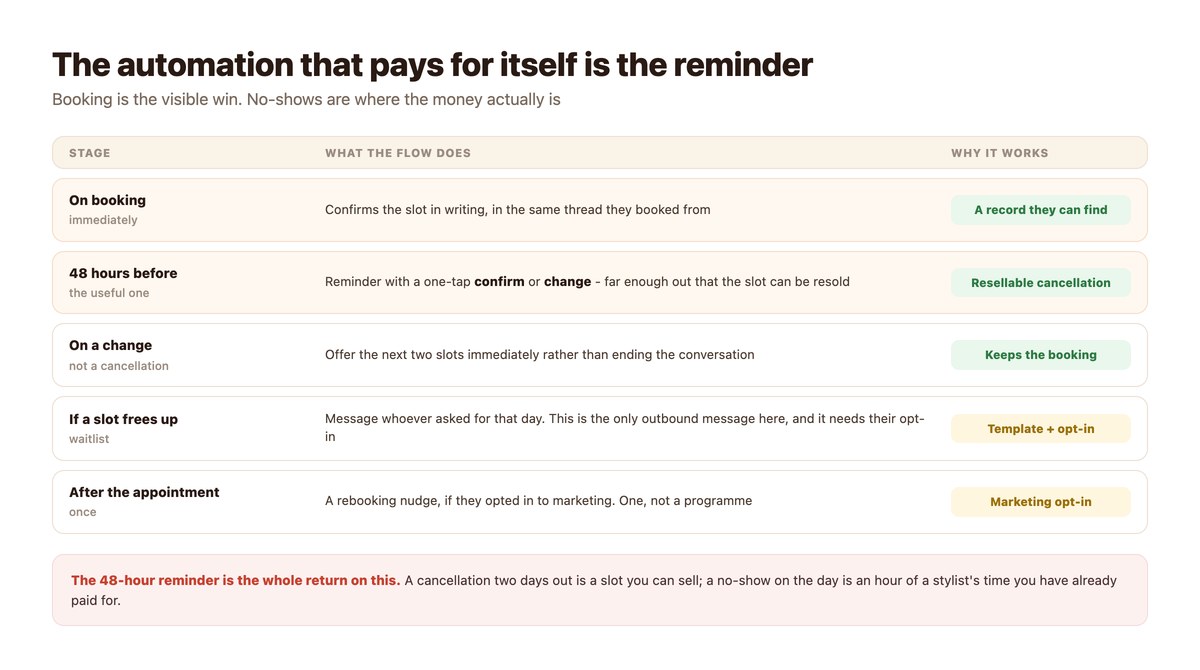
- The 48-hour reminder with one-tap confirm is where the return is – a cancellation two days out is resellable.
- Offer a change rather than accepting a cancellation, and the booking usually survives.
- Waitlist messages are outbound, so they need a template and opt-in.
Why Comments, Not DMs
A difference from most trades in this cluster, and it changes the setup.
The Photo Does the Selling
People decide they want the haircut before they decide to message you. The comment under the photograph is the moment of intent, and a keyword there – BOOK, PRICES – is the lowest-friction trigger available.
It also means the keyword should be said in the caption. “Comment BOOK and I will send you what is free this week” converts far better than hoping people guess.
The Public Reply Is Advertising
When you reply publicly under the photo before moving to the DM, everyone reading the comments learns two things: that you answer, and that you have space. Both are reasons to book.
This is the part a DM-only flow loses, and it is free.
And You Get Seven Days
A private reply to a public comment carries a seven-day window on Meta rather than twenty-four hours – which suits a trade where someone comments on Saturday night and decides on Monday morning.
The Three Questions Reception Already Asks
Nothing invented here. This is the existing phone script, written down.
Which Service
Buttons for your main services, because the duration and the price both depend on it and because “a cut” and “cut and colour” are different diary problems.
Include an “not sure / something else” option that routes to a person. Consultations are worth a human and they are often the biggest bookings.
Roughly When
Not an exact slot – a window. This week, next week, weekends only, evenings only. The calendar then offers real times inside it, which is a much better experience than asking someone to pick from a wall of availability.
Any Stylist in Particular
The question that matters most for repeat business and the one most often left out of automated booking. People come back for a person, not for a salon, and a flow that ignores that will book them with whoever is free and lose them.
Offer your team as buttons plus “no preference”, and route the booking accordingly.
The No-Show Problem
Booking automation is the visible benefit. This is the one that pays for it.
Two Days Out, Not Two Hours
A reminder on the morning of the appointment prevents very little – the person who was going to forget has already made other plans, and a cancellation at that point is an empty chair.
Forty-eight hours is the number that matters, because a slot released two days out can usually be sold. The reminder should carry one-tap confirm and one-tap change.
Offer a Change, Not a Cancellation
When someone taps “can’t make it”, the worst response is “okay, cancelled”. Offering the next two available slots in the same message keeps a meaningful share of those bookings.
It is one extra step in the flow and it is the difference between a diary gap and a moved appointment.
The Waitlist Is Outbound
Messaging somebody because a slot freed up means contacting a person who is not currently in a conversation with you. That is outbound, and it needs an approved template plus their opt-in – taken when they asked to be told.
Worth setting up properly rather than improvising, for the same reasons set out in the cart-reminder rules.
What to Automate and What to Pass On
Short list, because most salon enquiries are genuinely simple.
| They ask | Automate? | Note |
|---|---|---|
| How much is X? | Yes | Your price list, plainly |
| Any space Saturday? | Yes | Real slots from the calendar |
| Can I book with Lena? | Yes | Route to that stylist’s diary |
| I want to change colour completely | No – consultation | Big booking, worth a person |
| Will this work on my hair? | No – a person | A judgement about someone’s hair |
| Reaction, allergy, something went wrong | No – immediately | Safety, and never automated |
Which words belong on that hard list is the subject of support escalation rules.
Building It
An afternoon, and most of it is the calendar connection.
- Put the keyword in your captions. “Comment BOOK for this week’s spaces.” A keyword nobody is told about is a keyword nobody types.
- Set the comment trigger, scoped where it matters. You can limit a keyword to one post for a campaign, so an old photo does not keep firing.
- Write the three questions as buttons. Service, when, stylist. Include ‘not sure’ and ‘no preference’.
- Connect the booking calendar. Calendly, Cal.com, Acuity, SavvyCal, TidyCal or Bookme. The flow must end in a real time.
- Build the 48-hour reminder with confirm and change. This is the part that pays for the rest. Change must offer two alternative slots, not just accept a cancellation.
- Add the hard escalation words. Reaction, allergy, burn, complaint. Straight to a person, no exceptions.
Where This Connects
Two neighbours worth reading.
Evenings and Sundays
Salon enquiries cluster exactly when the salon is shut, which is the whole argument for automating the booking rather than the answering. The coverage options are in covering DMs after hours.
Knowing If It Worked
Two numbers tell you everything here: bookings created by the flow, and no-show rate before and after the reminder. Both are countable without an attribution model – the reasoning is in where the savings actually are.
Answer the Comment While They Are Still Looking at the Photo
“Any space Saturday?” under a photo of your work is as close to a booking as an enquiry gets. Answered on Monday, it is a customer who went somewhere else.
DMpro replies publicly under the post, asks the three questions reception asks, and books a real slot from your own calendar – then sends the reminder that stops it becoming an empty chair.
Conclusion
Salon automation is the most direct flow in this cluster because the enquiry is already a decision. A comment under a photograph, three questions, a real slot. Reception’s script, written down.
Trigger on comments rather than DMs, say the keyword in the caption, and reply publicly before moving private – the public reply tells everyone else reading that you answer and have space.
Then build the 48-hour reminder, because that is where the money is. A cancellation two days out can be sold; a no-show on the day is an hour of a stylist’s time you have already paid for.
Frequently asked questions
What should a salon DM automation ask?
Three things: which service, roughly when, and whether they want a particular stylist. That is reception’s existing phone script, and the stylist question is the one most often left out.
Should salons use comment triggers or DM keywords?
Comments, usually. The photograph is the advert and the enquiry arrives underneath it. Say the keyword in the caption, and reply publicly before moving to the DM – that public reply tells everyone reading that you answer.
Can the flow actually book the appointment?
Yes, by connecting Calendly, Cal.com, Acuity or similar. Ending in a real slot rather than ‘we’ll call you back’ is the entire point, especially for enquiries arriving when the salon is shut.
When should the reminder go out?
Forty-eight hours before, with one-tap confirm and change. A same-morning reminder prevents little – a slot released two days out can usually be resold.
What if someone wants to cancel?
Offer the next two available slots in the same message rather than simply accepting the cancellation. A meaningful share of those bookings move instead of disappearing.
Can I message someone when a slot frees up?
Only with their opt-in and an approved template, because that is an outbound message to someone not currently in a conversation with you. Take the opt-in when they ask to be told.