
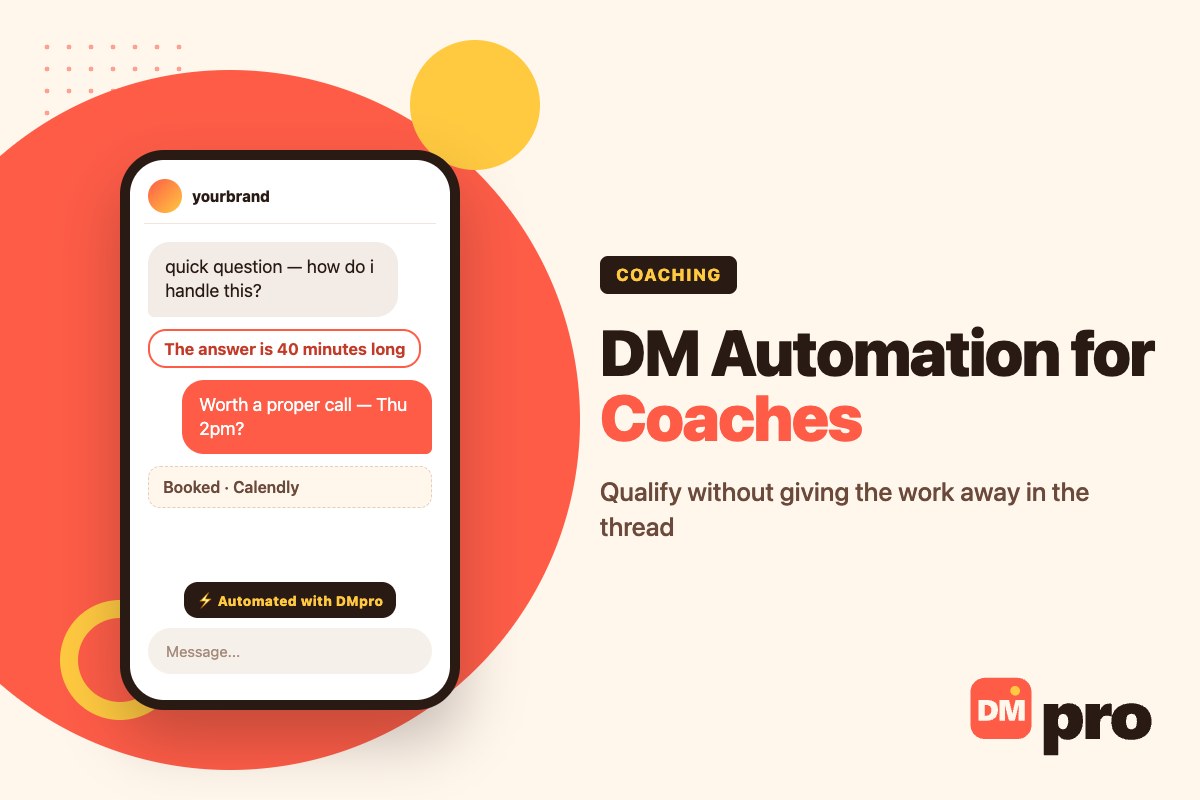
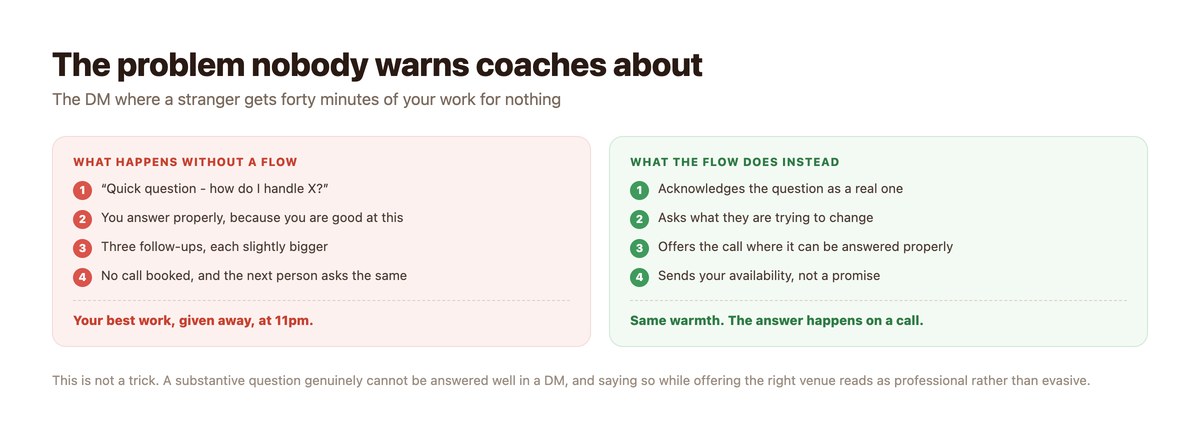
DM automation for coaches has to deal with a quirk: coaching enquiries arrive as questions, not as enquiries. “Quick question about X” is how most of them open, and the honest answer to it is forty minutes long – which is why so many coaches end up delivering their actual work in a DM thread at eleven at night, to someone who never books.
An automated flow fixes that without being cold about it. It takes the question seriously, asks the two things you would ask anyway, and moves the conversation to where it can actually be answered.
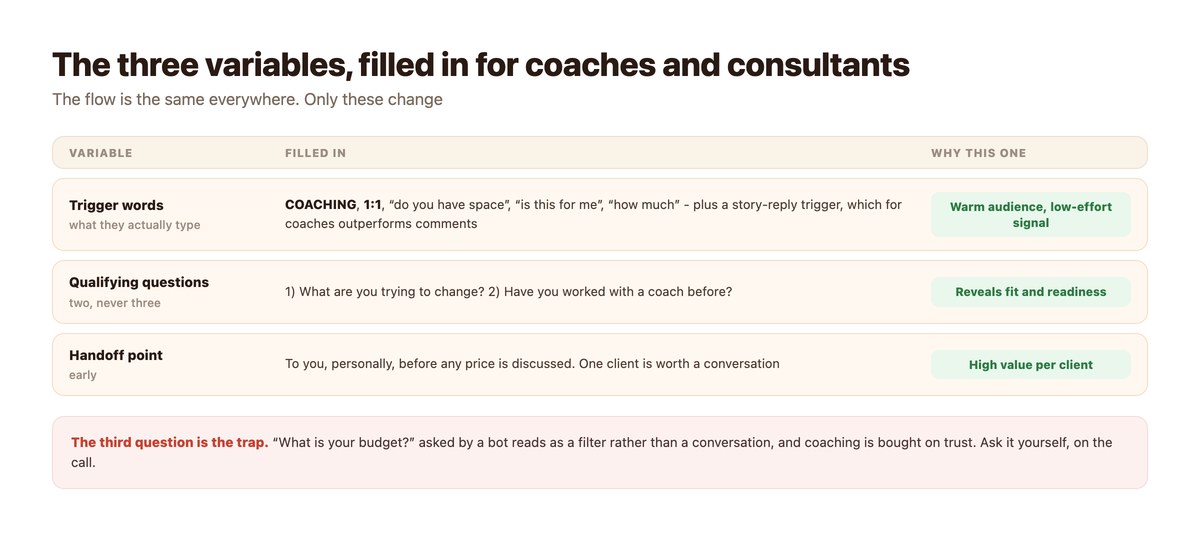
The flow shape is the standard one – see DM automation by industry. What follows is the three variables filled in for coaching, and the one question to keep off the bot.
Key takeaways
- Two qualifying questions, not three. What they want to change, and whether they have worked with a coach before.
- Keep the budget question off the automation – coaching is bought on trust and a bot asking about money reads as a filter.
- Story replies outperform comments for most coaches, because the audience is already warm.
- End in a real booking slot, not a promise to be in touch.
- Hand off to you personally, early – one client is worth a conversation.
- A substantive question genuinely cannot be answered in a DM. Saying so is professional, not evasive.
Why Coaching DMs Behave Differently
Two things make this trade unlike retail, and both change the flow.
The Enquiry Is Disguised as a Question
Nobody messages a coach saying “I would like to buy coaching”. They ask about a specific problem, because the problem is what is on their mind and because asking a question is lower risk than declaring an intention.
So a flow that only triggers on words like PRICING or BOOK will miss most genuine enquiries. The trigger set has to include the shape of a question – “how do I”, “is it normal that”, “do you work with”.
The Answer Is the Product
In most businesses, answering a question costs nothing and helps you sell. In coaching, answering the question is the thing being sold, which is why coaches give away so much in DMs without noticing.
The flow’s job is to be generous about the person and firm about the venue: take the question seriously, say honestly that it deserves more than a message, and offer the call.
One Client Justifies a Conversation
A coaching client is worth more than almost any retail order, which changes the handoff maths entirely. You should appear personally, early, and the automation should hand over rather than try to close.
That is the opposite of an e-commerce setup, and it is the main structural difference in this vertical.
The Two Questions
Chosen because a human coach can route confidently from the two answers alone.
“What Are You Trying to Change?”
This does two jobs. It tells you whether the person is in your area at all, and it makes them articulate the goal – which is itself the first step of the work and tends to increase their commitment to having the conversation.
Offer buttons for your three or four main areas plus “something else”, so the common cases are one tap and the unusual ones still get through.
“Have You Worked With a Coach Before?”
A readiness signal rather than a qualification one. Someone who has worked with a coach knows what they are buying and converts faster; someone who has not needs a different first call, with more explanation and less diagnosis.
Knowing which before you speak changes how you open, which is worth more than any other piece of pre-call information.
And the One to Leave Out
Budget. It is the obvious third question and it is the wrong one for an automation to ask. Coaching is bought on trust, and a bot asking about money before any relationship exists reads as a filter rather than a conversation.
Ask it yourself, on the call, where you can explain what the money buys.
What the Flow Sends, by Answer
Four endings is enough for most practices.
| They said | Send | Then |
|---|---|---|
| In your area, worked with a coach before | Your calendar, next three slots | You take the call |
| In your area, first time | A short ‘how this works’ plus the calendar | You take the call |
| Adjacent but not your thing | An honest no, plus a referral if you have one | Nothing – this is a win |
| Asking a one-off question | A real partial answer, then the call offer | Only follow up once |
| Price, before anything else | Your range, plainly | Do not make them ask twice |
Publishing a price range in row five is a judgement call, but hiding it produces a call with someone who was never going to pay – which costs you more than the enquiry was worth.
Building It
An afternoon, and the booking connection is the part that matters.
- Collect the actual question shapes from your inbox. A month of DMs. You are looking for how people phrase a problem, not for keywords like ‘coaching’.
- Add a story-reply trigger. For most coaches this outperforms comments, because the audience replying to a story is already warm.
- Write the two questions as buttons. Your three or four areas, plus ‘something else’. Four options maximum.
- Connect your calendar. Calendly, Cal.com, Acuity, SavvyCal, TidyCal or Bookme. The flow must end in a real slot – a promise to be in touch is where coaching enquiries die.
- Write the honest no. For people outside what you do. One sentence plus a referral if you have one.
- Hand off to yourself on anything unusual. Early. A coaching conversation is worth your attention far more than a retail one.
Where This Connects
Two neighbours worth reading if you are setting this up properly.
The Questions Are a Quiz
Two buttons routing to four outcomes is structurally identical to a product finder, and the same rules apply about exits and question count – the product recommendation chatbot covers the mechanics.
Weekend and Evening Enquiries
Coaching enquiries cluster in the evening, which is precisely when you should not be answering them personally. A holding message with a real time, plus a calendar link that works at midnight, handles most of it – after-hours DM support. Whichever model you pick, measure it on time to a first useful reply rather than on how fast the automation fires.
Take the Question Seriously. Have It on a Call.
“Quick question” is how most coaching clients introduce themselves, and answering it properly in a DM is how most of them never book.
DMpro picks up the enquiry however it is phrased, asks the two things you would ask anyway, and sends your real availability – so the conversation happens where you can actually do the work.
Conclusion
Coaching DMs are enquiries wearing the costume of questions, which is why keyword-only flows miss them and why so many coaches end up working for free in a message thread.
Trigger on the shape of a question, ask what they want to change and whether they have done this before, and end in a real calendar slot. Two questions, four endings, one booking link.
And keep budget off the bot. It is the obvious third question and the one that turns a warm conversation into a form – ask it yourself, on the call, where you can say what the money is for.
Frequently asked questions
What should a coaching DM automation ask?
Two things: what they are trying to change, and whether they have worked with a coach before. The first tells you if they are in your area, the second tells you how to open the call.
Should the bot ask about budget?
No. Coaching is bought on trust and a bot asking about money before any relationship exists reads as a filter. Ask it yourself on the call, where you can explain what the money buys.
How do I stop giving free coaching in DMs?
Have the flow take the question seriously, say honestly that it deserves more than a message, and offer the call with real availability attached. That reads as professional rather than evasive.
Which trigger works best for coaches?
Story replies, usually – the audience replying to a story is already warm. Comments and DM keywords work too, but the trigger set must include question shapes like “how do I” rather than only words like ‘coaching’.
Should the flow book the call directly?
Yes. Connect Calendly, Cal.com, Acuity or similar so it ends in a real slot. A promise to be in touch is where coaching enquiries die, especially the ones that arrive at eleven at night.
When should I take over personally?
Early, and on anything unusual. One coaching client is worth far more than a retail order, so the automation should hand over rather than try to close.